It transfers with the home
When you sell, the record goes with the house — the service history, the systems, the story. The next owner inherits the memory the way they inherit the roof.
Why permanent
Records that live inside an app die with the app. TrussPad is built the opposite way: your home’s history is attached to the address, transfers when the home sells, and belongs to you.
When you sell, the record goes with the house — the service history, the systems, the story. The next owner inherits the memory the way they inherit the roof.
When you sell, the record goes with the house — the service history, the systems, the story. The next owner inherits the memory the way they inherit the roof.
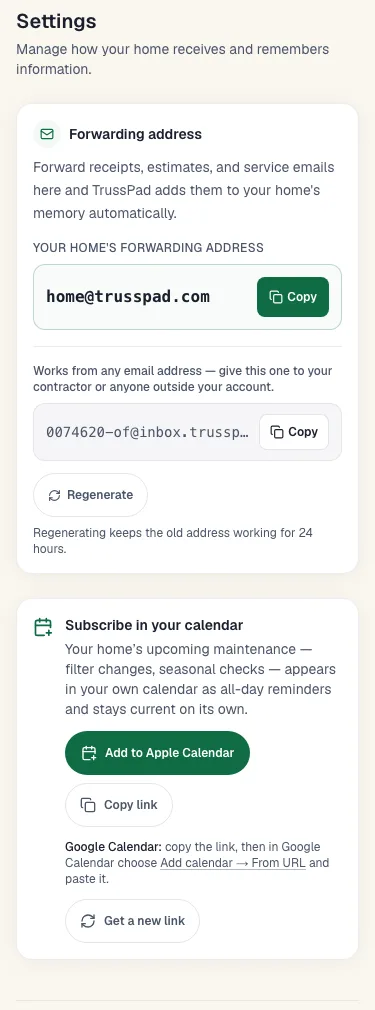
One forwarding address for everything you send it, and a calendar feed that keeps upcoming maintenance current on its own.
Common questions
It transfers with the house — the service history, the systems, the story. The next owner inherits the memory the way they inherit the roof.
No. The record belongs with the address, so it moves whole — nothing retyped, nothing lost between owners.
Full export is a launch commitment; your record is yours and you are never locked in.
If TrussPad ever winds down, you get your data first. That commitment is part of how the product is built, not a footnote.
Records that live inside an app die with the app, and files scattered across inboxes die with owners. TrussPad is built the opposite way: attached to the address, transferring with the home, and yours.
It is yours to take
Full export is a launch commitment; if TrussPad ever winds down, you get your data first. Your record is yours — you are never locked in.